
 Common Mistakes That Can Hurt Your Car Accident Claim
  Why Hiring An Immigration Attorney Can Improve Your Chances Of Success
  Can You Get A DUI On A Bicycle In Florida? Smart Yes
  Bankruptcy Attorney Houston: Proven Relief Guide Today
  Business Attorney New York: Powerful Guide For Success
  Car Accident Attorney In Riverside – Trusted Winning Help Today
  Divorce Attorneys Near Me: Trusted Legal Help Today
  What Really Happens When DCF Opens An Investigation Into Your Family Massachusetts
Have you ever wondered what happens if a back injury stops you from working? Every year, thousands of workers face this problem. Workers comp for a back injury is very important for them.
Back injuries at work get a lot of attention in safety talks. They are one of the most common and serious health risks at work. Knowing your rights and the workers’ compensation process can help a lot.
Workplace back injuries can happen anywhere – from construction sites to offices. Whether you’re lifting heavy things or sitting for a long time, back injuries are a risk. They can have big effects on your life.
Key Takeaways
- Workers’ compensation provides critical financial and medical support for work-related back injuries
- Understanding your rights is essential for a successful back injury at work claim
- Timely reporting and documentation are key in workers comp cases
- Back injuries can happen in any workplace, regardless of job type
- Medical evidence is very important in workers’ compensation claims
Understanding Workers Compensation
Workers compensation is a safety net for workers hurt on the job. It’s very important for those with back injuries. This insurance helps workers in many jobs across the United States.
Definition of Workers Compensation
Work injury compensation is a must-have insurance for job injuries. It helps workers get money and medical care without proving who was at fault.
- Provides medical expense coverage
- Offers wage replacement benefits
- Protects both employees and employers
- Covers work-related back injury benefits
Purpose of Workers Compensation Insurance
The main aim of workers compensation is to handle job injuries well. Work back injury benefits help workers deal with back problems without losing money.
| Compensation Type | Coverage Details |
|---|---|
| Medical Treatment | Full coverage for injury-related medical expenses |
| Wage Replacement | Partial income support during recovery |
| Rehabilitation | Support for physical therapy and job retraining |
Workers compensation doesn’t cover injuries from:
- Intentional self-inflicted harm
- Injuries during intoxication
- Off-duty recreational activities
- Personal disputes unrelated to work
Knowing these details helps workers understand their rights and what they might get.
Common Types of Back Injuries
Workplace back injuries can really hurt an employee’s health and work life. Knowing about different back injury claims helps workers stay safe and get the right care.
Back injuries at work can be small or serious. They can hurt the soft tissues or the bones. Many back injuries might need workers’ comp for herniated discs.
Strains and Sprains
Soft tissue injuries are very common at work. They happen from:
- Lifting heavy things wrong
- Making sudden moves
- Doing the same thing over and over
- Staying in awkward positions for a long time
Fractures
Spinal fractures are serious back injuries. They can come from:
- Big accidents at work
- Falling from high places
- Being squished
- Big workplace accidents
Herniated Discs
Herniated discs are tough back injuries. They happen when the spinal disc bulges out. This can press on nerves and cause a lot of pain.
| Injury Type | Common Causes | Typical Recovery Time |
|---|---|---|
| Muscle Strain | Lifting, Twisting | 2-4 Weeks |
| Herniated Disc | Heavy Lifting, Repetitive Motion | 6-12 Weeks |
| Spinal Fracture | Workplace Accidents | 3-6 Months |
Workers with ongoing back pain should write down their injury. They should also see a doctor and know their workers’ comp rights.
Eligibility for Workers Compensation
It’s important for workers with back injuries to know about workers compensation. Not every injury gets compensation. You need to know the rules to file a claim.
Workers compensation laws change by state. But, there are some rules that are the same everywhere for work injury claims.
Criteria for Claim Eligibility
To get workers compensation, you must meet certain rules:
- The injury must happen during work
- You must work for the company
- You must tell your employer quickly
- You need medical proof of the injury
Time Limits for Filing Claims
Every state has a deadline to file workers compensation claims. Telling your employer fast is key to keep your rights.
Here are some common deadlines:
- Tell your employer about the injury: Usually 30-45 days
- File your claim: Usually within 1 year of the injury
- Start legal action: Varies, often 2-3 years after the injury
Some states, like Texas, have special rules for private employers. This can affect your claim.
How to File a Workers Comp Claim
Filing a back injury claim can be tough. Workers with back injuries need to know how to get help through workers’ compensation.

Timing and paperwork are key when filing a claim. The first steps are very important for getting help for work injuries.
Step-by-Step Claim Filing Process
- Report the injury immediately to your supervisor or employer
- Seek medical attention from an approved workers’ compensation healthcare provider
- Document all medical treatments and work-related limitations
- Complete the official workers’ compensation claim forms
- Submit documentation to your employer’s HR department or workers’ comp insurance carrier
Essential Documentation for Your Claim
- Detailed incident report describing how the back injury occurred
- Medical records and physician statements
- Witness statements from coworkers
- Proof of lost wages and medical expenses
- Employment records demonstrating work history
Filing a back injury claim needs careful attention. Make sure all paperwork is right and in on time. This helps a lot in getting your injury covered.
Every workers’ compensation case is different. Getting help from a pro who knows the rules can make things easier. It also helps protect your rights.
The Role of Medical Documentation
Medical records are very important for workers’ compensation claims for back injuries. Good back injury doctor reports can help your claim succeed.
When you have a work-related back injury, your medical records are key. They are important evidence in your claim.
Importance of Medical Records
Your medical records should have all the details of your back injury. Important parts include:
- Detailed description of the injury
- Diagnostic test results
- Treatment plans
- Work restrictions recommended by healthcare providers
Choosing the Right Medical Provider
Picking the right doctor is very important for your back injury. Look for these things:
- Workers’ compensation experience: Choose a doctor who knows about workplace injuries
- Specialization in occupational medicine
- Willingness to provide detailed medical reports
- Understanding of workers’ compensation rules
Talking well with your doctor helps document your back injury fully. This makes your workers’ compensation claim stronger. It also helps you get the right compensation.
Assessing Benefits for Back Injuries
Getting workers comp for back injuries can be hard. It’s important to know what benefits are out there. The workers’ comp system has many ways to help injured workers get better.
- Medical Treatment Benefits
- Doctor visits
- Physical therapy
- Surgical procedures
- Rehabilitation services
- Wage Replacement Benefits
- Temporary total disability
- Temporary partial disability
- Permanent disability compensation
Calculating Compensation Amounts
How much you get for a back injury depends on a few things. These include:
- How bad the injury is
- Your average weekly wage
- How much you’re permanently hurt
- What the state says about compensation
Back pain compensation can be a part of your wage or full disability. You might get two-thirds of your weekly wage while you recover. If you’re permanently hurt, you could get more money in the long run.
Factors Influencing Benefit Calculations
Many things affect how much you get from workers comp. Important ones are:
- Medical records
- How long you need treatment
- If you’ll need more medical help in the future
The Impact of Pre-Existing Conditions
Dealing with chronic back pain claims gets harder when pre-existing conditions are involved. Workers with back pain from work need to know how their past health affects their claim.
Pre-existing conditions can really change how a workers’ compensation claim goes. Degenerative disc disease, which gets more common with age, can make filing a claim for a work injury tough.
Understanding Claim Interactions
When a work injury makes a pre-existing back condition worse, the rule of apportionment applies. This rule helps figure out how much of the injury is from the job versus the pre-existing condition.
- Disclose all medical history accurately
- Provide complete medical documents
- Show how work activities made the condition worse
Critical Disclosure Strategies
Telling the truth about pre-existing conditions is key when applying for workers’ compensation. Being open can help protect your claim from being denied or disputed.
Important steps for dealing with pre-existing conditions include:
- Get detailed medical records
- Get expert medical opinions
- Document specific work incidents that made the condition worse
Workers should work with doctors and maybe lawyers to build a strong case. This case should clearly show how a work incident hurt their existing back condition.
The Importance of Timely Reporting
Telling your boss about a back injury at work is very important. It helps you get compensation for your injury. Right after an injury, things can feel confusing and scary. But, acting fast is key to protect your rights and get the right medical care.
Workplace injuries need to be reported right away. Waiting too long can hurt your chances of getting help and money.
Reporting Procedures
Here’s what to do if you get hurt at work:
- Tell your boss right away
- Write down what happened
- See a doctor
- Fill out injury forms at work
- Ask for a copy of everything
Consequences of Delayed Reporting
Not telling your boss about an injury fast can cause big problems. Insurance companies and bosses might doubt your claim if you wait too long.
Here are some bad things that can happen:
- Your claim might not be believed
- You might not get compensation
- It could be hard to prove the injury was work-related
- You might miss out on medical help
- You could lose your legal rights
Pro tip: Always tell your boss about injuries right away, even if they seem small. Back injury symptoms can get worse over time.
Understanding the Appeals Process
Going through a back injury comp hearing can be tough. This is because your first workers’ compensation claim might get denied. The appeals process is a key way for workers to get the legal help they need for their back injury claim.
Claims for back injuries often face big challenges at first. It’s important for injured workers to know about the appeals process. This helps them get fair compensation.
Common Reasons for Claim Denials
- Insufficient medical documentation
- Disputed work-relatedness of the injury
- Missed reporting deadlines
- Incomplete accident reports
- Conflicting medical evidence
Steps to Appeal a Denied Claim
- Review the denial letter carefully
- Gather additional medical documentation
- File a formal appeal with the workers’ compensation board
- Request an administrative hearing
- Prepare supporting evidence for your back injury claim
Having a lawyer can really help you with your back injury comp hearing. Lawyers know what’s needed and can help gather all the right documents for your appeal.
The appeals process has many steps. You might have informal talks, mediation, and even a hearing in front of a judge. Each step needs careful planning and all your work injury details.
Hiring a Workers Compensation Attorney

Going through a workers comp for spine injury is tough. Getting legal help for a back injury claim can really help. Lawyers know a lot about workers’ compensation law. They can support you a lot during your claim.
Having a lawyer for a serious back injury at work has many benefits:
- They check your case well
- They know how much your claim is worth
- They protect your rights
- They talk to insurance companies
- They help in hearings and appeals
Benefits of Legal Representation
A good workers’ compensation lawyer can really help your claim. They know a lot about workplace injury laws. They can help you get more money. They collect important medical evidence and make sure everything is filed right.
Finding the Right Attorney for Your Case
Finding the right lawyer takes some thought. Look for lawyers who know a lot about workers comp for spine injury. Important things to think about include:
- Do they have experience with workers’ compensation?
- Have they won many back injury cases?
- Do they talk clearly and honestly?
- Do they work for free at first?
- Do they only get paid if they win?
Getting legal help for a back injury claim is a smart choice. The right lawyer makes a hard legal process easier. They help you get fair compensation.
The Role of Insurance Companies
Understanding workers compensation for back injuries is key. Insurance companies are vital in handling these claims. They look at medical bills for back injury compensation for workers.
Insurance companies have steps to check claims. An adjuster reviews back injury claims carefully. They check if the claim is valid and how much money it might be worth.
Claim Evaluation Strategies
Insurers use many ways to check claims:
- They look at medical records closely.
- They check how the injury happened at work.
- They see how bad the injury is and if it will last long.
- They make sure the injury happened at work.
Common Insurance Company Tactics
Insurance companies have ways to handle claims:
- They might ask for extra medical checks.
- They might say the injury isn’t as bad as thought.
- They might try to lower the amount of money given.
- They might look at any health problems before the injury.
Workers should know these tactics. They should also have good records to support their medical bills back injury claims.
Knowing your rights and keeping good records helps. It can make getting fair compensation for back injuries at work easier.
Disability Ratings and Their Implications
Understanding workers compensation for back injuries is key. Disability ratings are important. They help figure out how much money injured workers get.
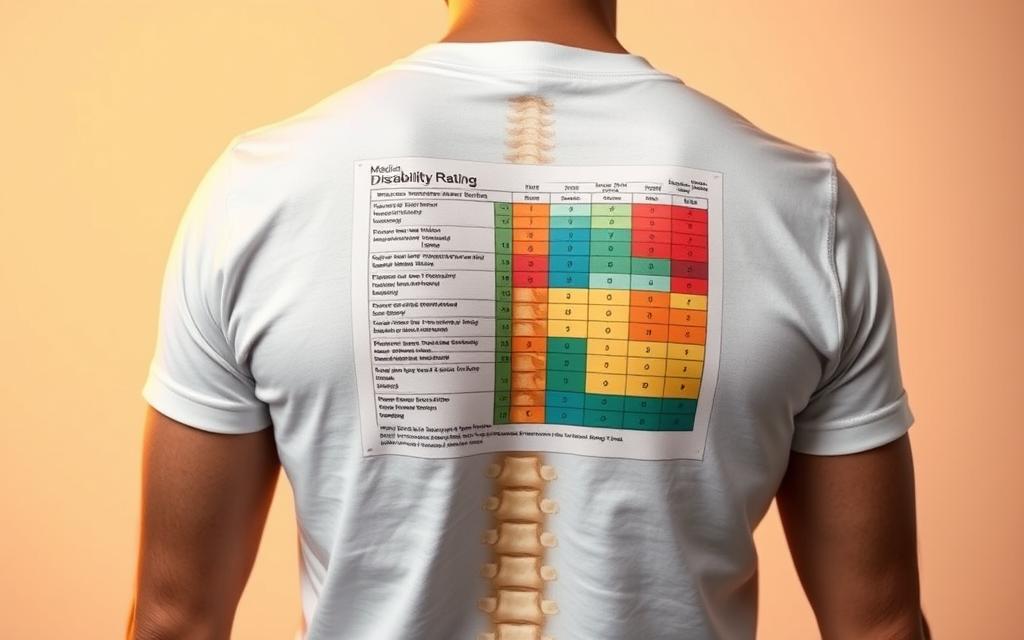
A disability rating shows how much a back injury affects work. Doctors look at how well someone can do their job. This is important for back injury claims.
Understanding Disability Ratings
Disability ratings follow certain rules. The American Medical Association (AMA) Impairment Guides are used. These guides help figure out how much money injured workers get.
- Temporary Partial Disability (TPD)
- Temporary Total Disability (TTD)
- Permanent Partial Disability (PPD)
- Permanent Total Disability (PTD)
How Ratings Impact Compensation
The rating you get affects your money. A higher rating means more money and benefits. This includes longer benefits and help finding a new job.
Injured workers should keep track of their medical care. They should also note any work limits. This helps with their rating.
Return to Work After an Injury
Getting back to work after a desk job injury is tough. You need a good plan, doctor’s advice, and to know your rights.
Evaluating Your Readiness to Work
Figuring out if you’re ready to go back to work is complex. Doctors will check your physical health. They look at:
- Pain management progress
- Range of motion limitations
- Physical strength and endurance
- Psychological readiness
Accommodations and Modified Duties
Workplaces can help you get back on track. They might offer:
- Reduced work hours
- Ergonomic workspace adjustments
- Temporary reassignment to less physically demanding tasks
- Gradual return to full-time responsibilities
Talking well with your doctor and employer is key. Knowing your limits and wanting to work helps a lot.
Common Myths About Workers Compensation
Many people don’t know the truth about workers comp for back injuries. This can stop workers from getting the help they need. It’s important to know what’s real and what’s not when it comes to workplace injuries.
There are many wrong ideas about workers’ compensation. These ideas might stop people from getting the medical care and money they deserve. It’s key to know the truth to get the right help.
Debunking Key Misconceptions
- Myth: All workplace injuries are automatically covered
Reality: Not all injuries are covered by workers comp. It depends on where and how the injury happened.
- Myth: Filing a claim will get you fired
It’s against the law for employers to fire someone for filing a workers comp claim. This includes claims for back injuries.
- Myth: Pre-existing conditions disqualify you from benefits
Even if you had a condition before, you might get benefits if it got worse at work.
Importance of Accurate Information
Knowing the truth about workers comp for back injuries helps protect workers’ rights. False information can cause people to miss out on important help and money.
It’s best to talk to experts, doctors, and maybe a workers’ compensation lawyer. They can give you the right advice for your situation.
Resources for Workers with Back Injuries
Dealing with a back injury at work can be tough. Workers facing challenges with work back injury benefits need help and advice. The right help can greatly aid in recovery and getting compensation.
Finding good support groups and learning materials is key for injured workers. These resources help people know their rights and options for getting better.
Support Networks and Organizations
- National Institute for Occupational Safety and Health (NIOSH)
- Workers’ Compensation Research Institute
- American Occupational Therapy Association
- Disability Rights Advocates
Online Educational Resources
- OSHA workplace injury prevention guides
- Ergonomics training programs
- Rehabilitation counseling services
- Digital medical information portals
| Resource Type | Key Benefits | Access Method |
|---|---|---|
| Medical Rehabilitation Centers | Specialized treatment for back injuries | Physician referral or direct contact |
| Legal Support Networks | Workers’ compensation claim guidance | Online directories and local bar associations |
| Vocational Rehabilitation Programs | Job retraining and employment support | State workforce development agencies |
Workers with back injuries should look for many support options. Knowing and getting the right advice can really help in getting better and getting compensation.
Staying Informed on Workers Comp Regulations
Workers compensation for back injuries is complex. Rules change often. It’s key for workers and bosses to keep up with new laws.
State rules affect how back injury claims are handled. It’s important to know these rules.
Keeping up with law changes is vital. The Texas Department of Insurance’s Division of Workers’ Compensation (DWC) has important info. You can also get updates by joining newsletters, going to seminars, and checking state websites.
Technology helps track changes in work injury rules. Websites, groups, and legal sites give updates fast. Workers with back injuries need to watch for changes in how benefits are given out.
Doing research helps you understand the workers comp system. Knowing the latest laws helps workers get fair pay for back injuries. Staying connected with trusted sources helps make smart choices during the compensation process.

